
Starting your self-publishing journey
Let’s be honest, anyone who says self-publishing is easy, is lying to themselves.
You have a choice to make between going after the traditional publishing route, which means getting an agent who will then pitch your story to publishers, or the alternative route: self-publishing.
Self-publishing is not a path you go down if you feel you have failed at the traditional route. If anything, self-publishing is a whole lot more work, and you’ll need to dig into your own pockets to fund it.
But, it doesn’t necessarily mean that it needs to be expensive. There are tools and platforms, such as Amazon KDP, that allow anyone to publish a book easily, without spending much.
So, if you are at the beginning of your self-publishing journey, here is where I would start.
First, know what you actually want from publishing
Not every indie author has the same goal. Some people want to publish one book because it means something to them, or want to build a full author career, or want to sell at markets, conventions and book fairs. Some want to be stocked in bookstores. Some want ebooks only. And some want sprayed edges, foil covers, hardbacks, character art, PR boxes, the whole thing, …
There is a huuuuge range of authors out there who want different things. Are you the kind who will publish one book every year or so, or go at it full time and publish 20 books in a year?
If you just want your book available online, print-on-demand might be enough (So the KDP avenue). If you want to sell signed copies, attend events, or create special editions, you will probably need to think about printing physical stock, and we’ll get to that further down.
Do not publish the first file you finish
I say this with absolute love: finishing a manuscript does not mean it is ready to publish.
It means you have finished the writing part. And I learned this the hard part with my first book, that has gotten a total of 4 versions edited because I wanted to publish sooner rather than later, which was a big mistake.
Once you’re done with your manuscript, there is still editing, proofreading, formatting, cover design, metadata, upload files, print files, launch planning, and probably at least one tiny formatting issue that will make you question every life choice that led you here.
Your book does not need to be perfect, but it does need to be treated like something readers are paying for.
At the very least, get fresh eyes on it. That might be beta readers, critique partners, a proofreader, an editor, or a combination depending on your budget. Get your friends and family involved. Heaps of people will put their hand up to be a beta reader just because they love reading and they get a free book in exchange.
The great thing about being an indie author, is that there is a community for you – ‘BookTok’, ‘Bookstagram’ and so many groups you can join on Facebook that will help you start your journey.
Your cover is not just “pretty art”
This is one of the biggest mistakes new authors make. A cover is not just about what you personally like. It has a job to do which is to tell the right readers, very quickly, what kind of book this is.
Each genre will have its own type of guidelines. In my experience with Dark Fantasy (and my own mistakes), real people on covers do not sell well, over beautiful character illustrations (if you have the budget), or more minimalist designs that you can create yourself through Canva.
Put enough on the cover so that the readers you want to attract know it’s for them (a lot of great covers will tell you if they’re more Fae realm, or dark vampire romance).
Learn the boring publishing words
Unfortunately, some of the boring stuff matters.
You do not need to become a publishing expert overnight, but you do need to understand the basics so you are not completely lost when someone asks for your trim size or print-ready PDF.
A few terms worth knowing:
ISBN - the unique identifier for your book. Different formats usually need different ISBNs.
Trim size - the final physical size of your book.
Bleed - the extra space around the edges of a design so nothing important gets chopped off when the book is trimmed (KDP for example won’t often accept designs on the internal pages that go past the bleed).
Typesetting or formatting - the layout of the inside of your book.
Metadata - the information attached to your book listing, like your title, subtitle, description, categories and keywords.
Proof copy - a test copy you check before approving the final version.
Print-on-demand - when books are printed as orders come in.
Bulk printing - when you print a quantity of books upfront, often for events, direct sales or special editions.
Think about how people will actually find you
A lot of authors put everything into writing the book, then panic when it comes time to market it because marketing in itself is a full-time job.
And trust me, unless you sign on with one of the big five publishers, marketing will always fall back on you unfortunately.
And that means you have to start posting about your writing process, share behind-the-scenes content, build an email list, write blogs, make reels, attend events, sendARCs, connectwith other authors, and/or make your website easier to find.
There’s no need to be on every platform, and you can repost things from one to the other.
Then make it clear who you are, what you write, and where people can buy or follow along.
Please make an author website
Yes, even if you are active on social media.
Your website is the one place that is actually yours. Social media platforms can change, glitch, ban, disappear, ruin reach, or randomly decide your post about dragons is only worth showing to twelve people and a bot called Greg.
Your website does not need to be complicated. At minimum, it should have:
Your author name
Your books
Buy links
A short bio
Contact details
Newsletter signup
Media or event information if relevant
Think of it as your home base. Everything else can point back to it.
Budget before you panic-spend
Self-publishing can be affordable, or it can become a very expensive hobby.
Before you start paying for things, make a basic budget.
Possible costs include editing, proofreading, cover design, formatting, ISBNs, website hosting, email software, print copies, ads, event tables, shipping materials, bookmarks, banners, packaging, and the random little expenses that sneak up on you.
You do not need to buy everything at once. You also do not need to have the most expensive version of everything to be a “real” author.
Spend where it matters most for your goals. For most authors, that usually means the manuscript, the cover, and the reader experience. The extras can come later.
And there are affordable options everywhere - KDP offers barcodes/ISBNs for free, but make sure to read their T&Cs.
But please, for the love of the book Gods, do NOT use any AI whatsoever in or near your book.
Can’t afford a cover? My first cover was a stock image I bought the rights from for $14 that I added my title onto. This was over 10 years ago. Now, there are tools like Canva (Stay away from the AI options!!), and cheap cover designers on platforms like Fiverr. Start somewhere, you can always come out with a new cover once you have a bigger budget.
If you have a bigger budget, I highly recommend getting an illustrator to do the work (the covers for The Stone of Four Fires series were all done by Sacha Lee Coleman (@sachac_art) as well as some character art and I’ve sold so many copies just from fans of her work.
Your first book is not your whole career
This is the part I wish more new authors believed: Your first book matters, but it does not have to carry the entire weight of your future.
You are allowed to learn and to improve.
You are allowed to publish a book, realise you would do some things differently next time, and then simply do them differently next time.
That is not failure. That is literally how experience works.
It wasn’t until 20 years into my writing career that I finally finished the second book of my series and realised I needed to completely redo my first book, because, well, it was atrocious (thank you to those who enjoyed the story so much they ignored my bad writing!).
So no, you do not need to know everything before you start, you just need to take the next step.
Write the book, make it as strong as you can, package it professionally, learn the basics, start building your audience, and keep going.
Because the only way you can get better at writing, is by writing some more.
Printing vs Print-on-Demand
I have a love-hate relationship with KDP, as Amazon takes a really big cut off the total amount of the book (including the printing which they charge for) and you end up with barely $1-$2 per book sold. So basically you get paid like a traditionally published author, but without the quality, marketing or nice advance.
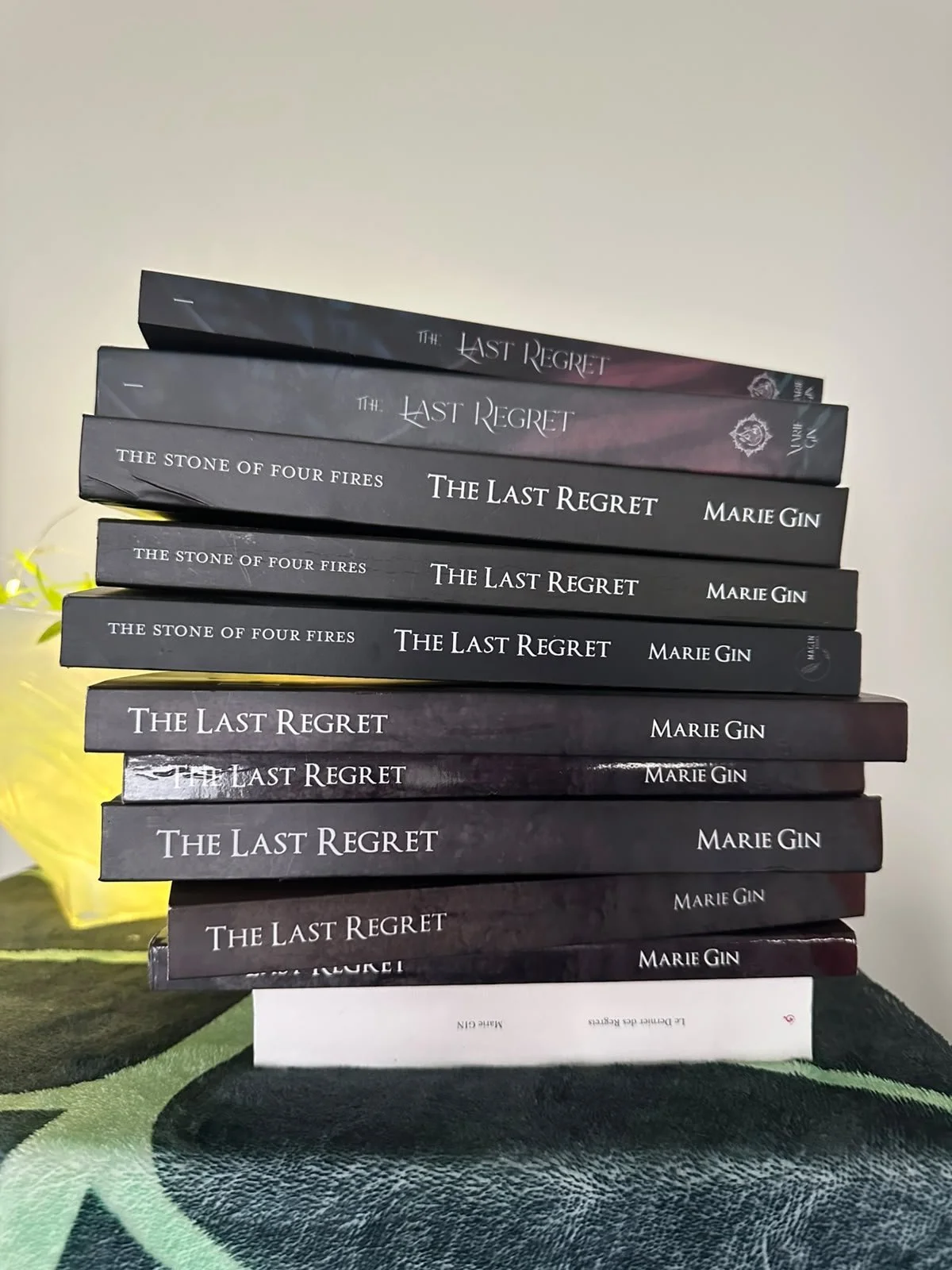
And over the last 10 years, I have tried quite a few printers from KDP, IngramSparks, and many overseas to try and cut costs.
KDP’s quality, at least in Australia, has always been somewhat of a letdown, especially when they sell individual books around $10 or more when ordering author copies. That means needing a $1,000 budget for events if you want to have 100 copies, that won’t even be of good quality.
Overseas printers are a bit more cost effective per book, but you’re forced to order in bulk, so it’s usually an even higher budget, and it takes 2-3 months to get delivered (because sea is cheaper than air freight).
So I’m going to give a little shoutout to a local Australian business that has been very affordable per book, with a Minimum Order Quantity of 30 books, and has much better quality than any of the other printers I’ve tried so far: FolioFox
FolioFox is based in Melbourne and they print all of their books in Australia. So far, they’ve beat KDP and overseas printers on price, quantity and quality. Check them out here: https://www.foliofox.com.au/ for all your book printing needs.
Book Events
These have been where I’ve made the most of my money, making at least $1,000 over a weekend event (granted I also sell book merchandise). Here are a few I recommend (These are all in Australia):
Book Fair Australia
Supernova
OZ Comic Con
InkWell Events (I am attending one in October, yet to confirm if it’ll be good sales or not)
Smaller Pop Culture events, often in the Blue Mountains
Local markets, especially before Christmas
Need more help?
Just send me an email or a DM on my socials and I’d be more than happy to answer questions when I can!